Human Capital Strategy
CLOSE
MENU
Sustainability
Sustainability Management
Materiality
Environment
Environmental Management
Business Activities and Environmental Impact
Cleantech
Response to Climate Change
Social
Human Capital Strategy
Respect for human rights
Health and Safety
Supply chain
Quality
Social Contribution Activities
Governance
Compliance Policy for The Japan Steel Works Group
The Japan Steel Works Group Basic Sustainability Policy
Non-financial data
Based on the belief that human capital is indispensable for our Group to practice sustainability management in embodying our Purpose and achieving our Vision over the long term, we have identified "human capital improvement and DEI&B" as a material issue. With the recognition that the individual and the organization are equals, we have formulated a human capital strategy to address this material issue. While ensuring and improving diversity is the foundation of this approach, value cannot be created merely by bringing together different individuals.
We believe that considerations that enable people with different individual characteristics to achieve results, mutual recognition and respect, and a sense of affinity with the organization that inspires employees to make contributions foster diverse perspectives and ideas, which form the groundwork for innovation. Moreover, given that this approach also helps prevent discrimination based on individual differences, we position it as a foundation for respecting human rights.
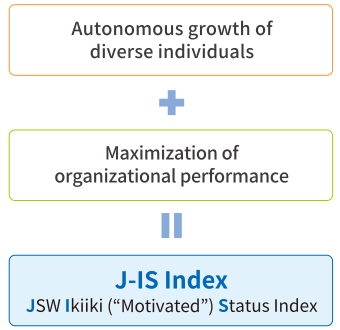
In addition, to contribute to the achievement of our objectives under JGP2028, we will link our business strategies with our HR initiatives to achieve both the autonomous growth of diverse individuals and the maximization of organizational performance, thereby achieving sustainable enhancement of corporate value. To achieve this, we will create an environment in which diverse individuals can acquire and fully demonstrate the skills needed to execute our business strategies according to their needs, and we will advance organizational transformation by enhancing engagement and fostering a culture that encourages taking on challenges.
Based on a shared foundation of embodying our Purpose through the practice of the Five Guiding Principles for Action of the Japan Steel Works Group and company commitments that ensure psychological safety, all officers and employees with different personalities will maximize and demonstrate their potential and, by stimulating healthy discussion, will use this as a driving force for improving productivity and breeding innovation.
The corporate image we seek is a company where "individual self-realization" and "sustainable growth of the organization" mutually circulate, and the individual and organization continue to thrive together. We will implement a variety of measures so that our daily efforts help solve social problems, so that we remain a company with value to society, and so that we can feel this for ourselves.
Human Capital Strategy Indicators and Targets
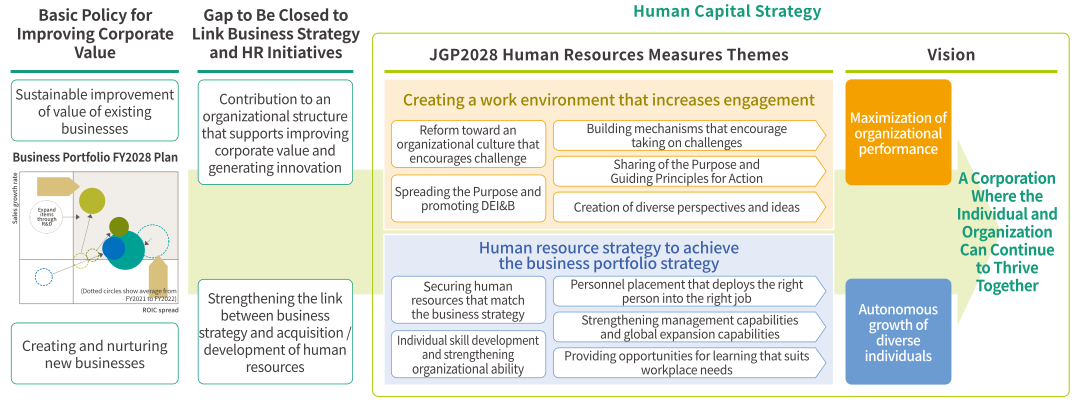
In order to quantitatively assess progress on "autonomous growth of diverse individuals" and "maximization of organizational performance," we established the J-IS Index (JSW Ikiiki ("Motivated") Status Index) using selected indicators from our engagement survey. Taking fiscal 2022, the first year of implementation, as a 100 point baseline, the score for fiscal 2024 rose to 104 points, boosted by improvements in organizational culture.

Our Human Capital Strategy
In formulating our human capital strategy, we identified the gaps that must be addressed to contribute to realizing the basic policies of JGP2028 ("sustainable improvement of value of existing businesses" and "creating and nurturing new businesses") as "strengthening the link between business strategy and human-resource acquisition and development measures" and "contributing to the development of an organizational culture that supports enhancing corporate value and generating innovation," and proposed various measures accordingly.
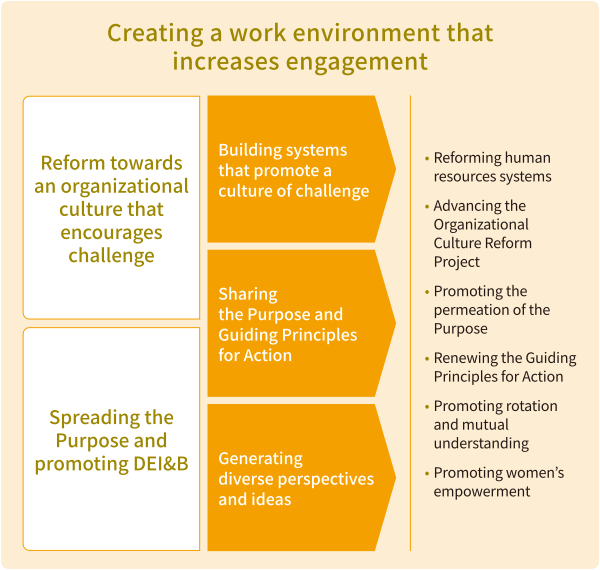
Creating a Work Environment That Enhances Engagement
Reform toward an organizational culture that encourages challenge
In a rapidly changing business environment full of volatility, achieving sustainable growth for the Group requires us to continuously innovate. To that end, we must transform our organizational culture into one where employees feel encouraged to pursue challenges without fear of failure, backed by a high level of psychological safety.
Starting in fiscal 2023, the Organizational Culture Reform Project Team, comprising employees with a passion for driving change, has been working closely with management as the driving force behind cultural reform efforts, promoting these activities through both bottom-up and top-down approaches. In April 2025, we established the Japan Steel Works Group Five Guiding Principles for Action to encourage employees to take on challenges.
In our human resources system as well, managers are required to set "challenge goals" within their annual targets to drive changes in mindset and promote action.
Spreading the Purpose and promoting DEI&B
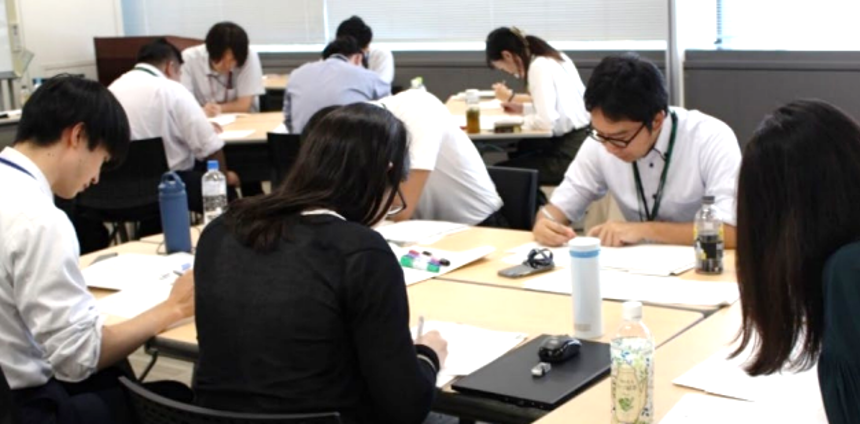
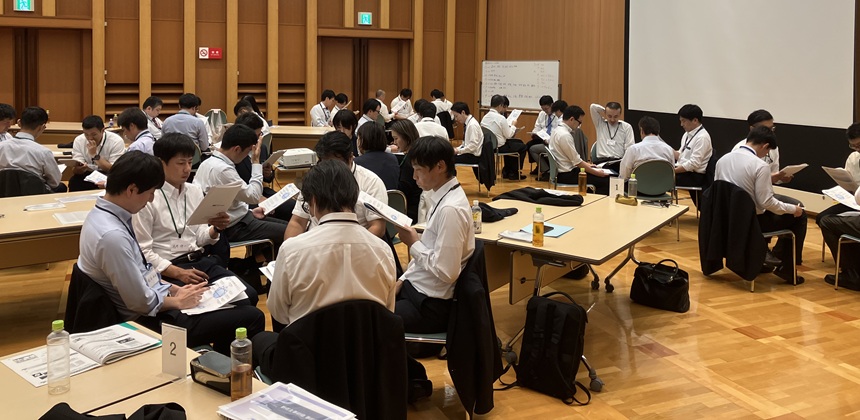
Efforts are currently underway to help the Purpose resonate with all officers and employees. At workplaces, organizational managers lead workshops to discuss the connection between the Purpose and daily operations to instill this among workers.
The Group also recognizes that leveraging diverse talent to connect different perspectives and ideas to new value is essential in executing its management strategy. Accordingly, we have identified "promotion of DEI&B" as a materiality and are advancing related initiatives.
Human resource strategy to achieve the business portfolio strategy
Acquisition of human resources that match our business strategy
JSW Group’s workforce includes many highly skilled mid-tier personnel in their 30s to 40s who have plenty of experience.
In order to execute our business strategy and achieve sustainable growth, we need to maintain and increase the depth of this cohort, and therefore we are working with the business divisions to enhance hiring. In addition, even as we focus on hiring new graduates as young employees who will grow into the middle tier of the future, we actively recruit experienced employees throughout the year.
We are also working to build a system that visualizes the skills our employees possess and are developing an environment enabling personnel placement that deploys the right person into the right job in line with our business strategies.
Developing individual skills and strengthening organizational (management) capabilities
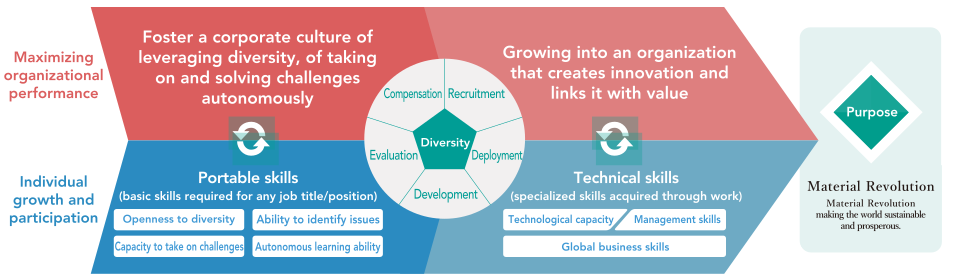
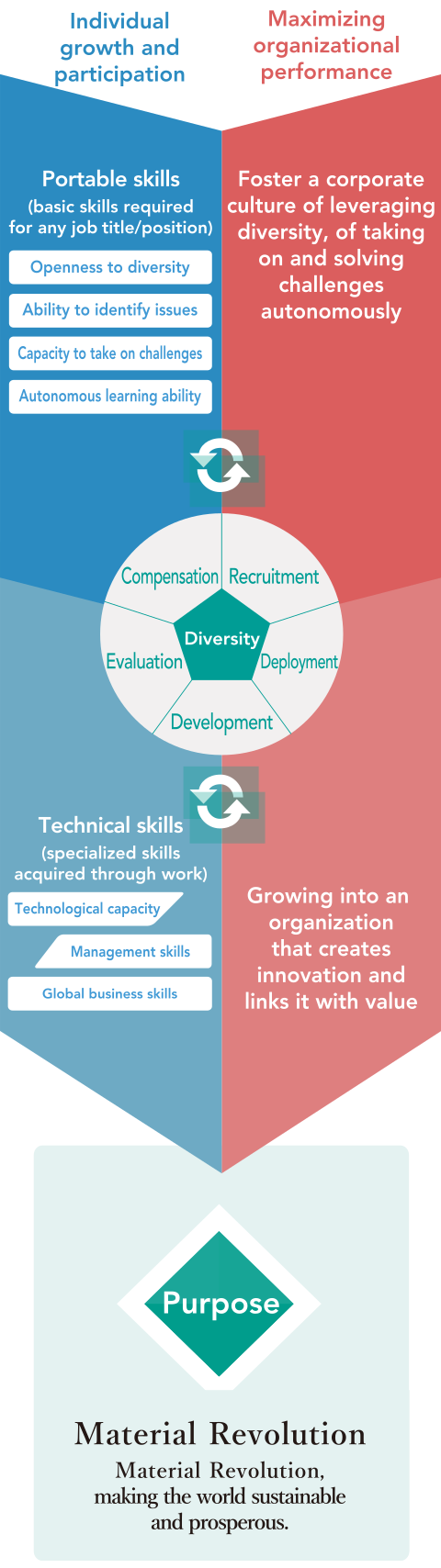
We believe that leveraging diversity and having workers autonomously take on challenges breeds innovation and maximizes organizational results. In our human capital strategy, which aims to achieve this, we focus first on developing the abilities of the individual (portable skills— foundational skills required regardless of role or position— and technical skills—specialized abilities acquired through work experience) and are working to enhance these skills through various initiatives. In particular, for younger employees, we will implement systematic rotations to encourage growth through diverse work experiences.
To connect increased individual skills to organizational success, increasing management ability in the workplace is vital. Starting in fiscal 2024, we have begun implementing training for organizational managers to drive organizational transformation and promote management skills that encourage workers to take on challenges by ensuring psychological safety.
Human Capital Management
The corporate image that JSW Group is aiming for is one where "individual self-realization" and "sustainable growth of the organization" mutually circulate, and the individual and organization continue to thrive together. To this end, we are linking various human resources initiatives based on business strategies to achieve autonomous growth and active participation of diverse individuals and maximizing of organizational performance, thereby realizing sustainable growth and improved corporate value.
In addition, as a foundation for implementing these strategies, we are promoting measures to increase engagement, thereby creating a work environment where employees can reach their full potential.
JGP2028 Human R esources Initiatives
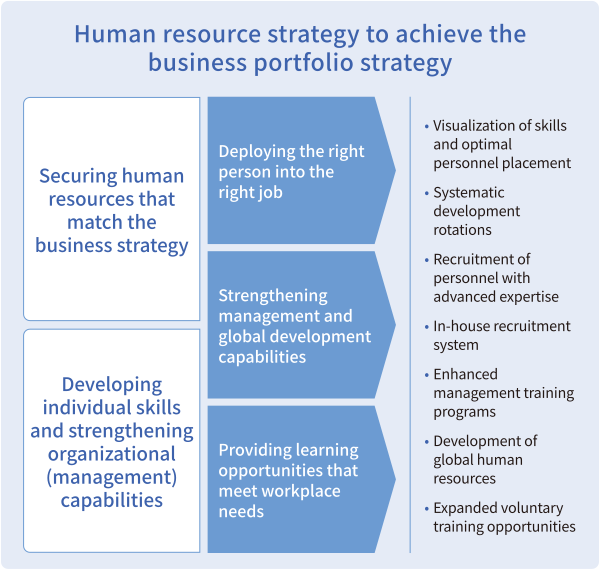
Human Resource Strategy to Achieve the Business Portfolio Strategy
Deploying the Right Person into the Right Job
To ensure that we deploy the right person into the right job in executing our business strategies, we are developing a talent management system. By visualizing not only employees’ career histories but also their individual skills, we will promote the optimal allocation of personnel to address a wide range of business challenges.
In addition, while taking into account each individual’s aptitude and personality, we are systematizing personnel rotations based on a medium-term development vision to achieve placements best suited to business execution.
In addition, we are embarking on initiatives that will promote autonomous career development, including implementing planned internal open recruitment in certain divisions, with the aim of developing personnel by encouraging them to take on the challenge of developing new businesses.
In recruiting new graduates from science and engineering backgrounds, we offer opportunities during the selection process for applicants to meet with senior employees, thereby deepening their understanding of our business. In the actual interviews, department heads from the divisions where candidates are expected to be assigned after joining the Company serve as interviewers, ensuring the recruitment of students who are expected to contribute actively to our business operations. For new graduates from humanities backgrounds, we also emphasize applicants’ willingness to take on the global business challenges the Company is pursuing as part of our selection criteria.
When recruiting candidates who already have experience in the requisite field, interviewers are selected from business divisions to ensure alignment between applicants’ career backgrounds and aspirations and the direction of our business.
Going forward, we will also focus on expanding the recruitment of personnel with advanced expertise directly connected to business needs, such as those holding doctoral degrees.
Strengthening Management and Global Development Capabilities
Based on the results of the engagement survey, we believe that to raise the level of performance for the organization as a whole, it is important to enhance the skills of organizational managers who drive the workplace to achieve strategic goals.
Firstly, we consider it important for the organizational managers to develop the skills to enhance the psychological safety and job satisfaction of workplace members, and therefore have strengthened the training to acquire management skills with a view to contributing not only to improved engagement but also to organizational change and innovation.
We also implement educational programs, particularly for young employees, to help them acquire global business skills. In addition to improving skills such as negotiating and giving presentations in English, this training also gives participants the opportunity to learn styles of thinking that have global resonance.
Moreover, we provide the basic and specialized education required for global business, such as language training including study abroad, and workplace rotation for personnel development, including to the Company’s international locations, to drive the global expansion of the Group’s business.
Going forward, we will increase opportunities for employees to acquire management skills that encompass the formulation and execution of growth strategies, the establishment of corresponding management structures, and knowledge of M&A.
Providing Learning Opportunities That Meet Workplace Needs
Since personnel composition and challenges differ across workplaces, we believe that expanding diverse educational content to meet various learning needs—rather than relying solely on uniform company-wide training—will enable timely and appropriate educational opportunities suited to each workplace’s actual circumstances. To this end, we are expanding our lineup of voluntary training programs. In addition, to support self-development, we have established an online learning platform to create an environment where employees can learn the skills they wish to acquire.
As part of the Group’s ongoing DX initiatives, we are also focusing on DX education. All employees have been categorized into levels according to responsibilities and IT skills, and the target percentage of employees at each level has been set. As we work to achieve these percentages, we are developing an environment to provide appropriate educational content to employees with various skill levels, thereby working to improve IT literacy throughout JSW Group. In addition to the foregoing, we will also work to develop department leaders, familiar with business as well as IT, who will promote digitization of business operations to derive concrete results from DX activities.
Beyond education and training programs, we also actively fast-track young high performers into management in anticipation of future advancement to senior management. We also actively conduct development measures through internal recruitment and rotation.
| Indicators | FY2022 | FY2023 | FY2024 |
|---|---|---|---|
| Training cost per employee (thousands of yen) | 53.3 | 58.8 | 65.8 |
| Number of participants in job level-specific training | 266 | 317 | 305 |
| Completion rate of job level-specific training (%) | 98.1 | 98.1 | 98.0 |
| Number of employees newly certified under The National Trade Skill Test & Certification (NTSTC) |
100 | 98 | 104 |
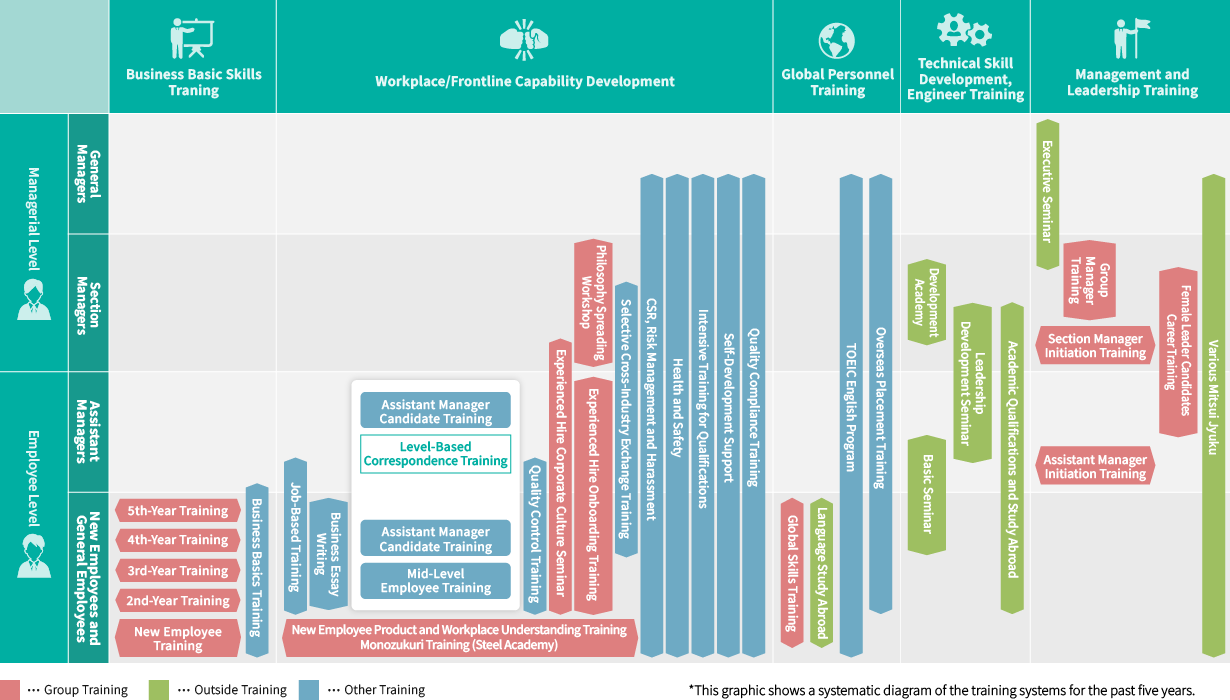
Training System
Evaluation and Compensation
Separate systems have been established for general employees (non-managers) and managers. Each individual's evaluation is conducted annually and reflected in their compensation.
Evaluation of general employees focuses on job performance. At the assistant manager level, the highest general employee level, the Company sets goals based on the individual’s scope of responsibility, and evaluates based on achievement of those goals. For management-level employees, an MBO system has been put in place, where they set goals autonomously with respect to problem-solving and organizational development linked to business objectives, and work autonomously to achieve them.
Communication with supervisors is mandatory in setting goals for managers and assistant managers. Such communication reinforces the link between management and individual goals, and ensures that all employees can exercise their individual abilities and play an active role in furthering the organization’s pursuit of management strategy.
In the past, the MBO system for managers had set targets for a single fiscal year, which was inconsistent with the medium-term targets. Starting in fiscal 2024, we have clarified the setting of targets over a multi-year span for the execution of the mediumterm management plan, and set new challenge targets so as not to operate the system in a conservative manner.
Creating a Work Environment That Increases Engagement
Building Systems That Promote a Culture of Challenge
Sharing the Purpose and Guiding Principles for Action
We have been advancing organizational culture reform activities since the fiscal 2023, and to further accelerate these efforts, we established the Five Guiding Principles for Action in fiscal 2025. These guidelines serve as principles for employees’ daily decisions and actions, fostering a culture where all employees are encouraged to take on challenges with courage and to grow through failure rather than fear it.
We are also reviewing our personnel systems to incorporate mechanisms that evaluate and reward employees who take on challenges. We are currently developing plans to revise the management position system, after which we plan to update the personnel system for general employees.
Regarding the Purpose established in fiscal 2022, we are implementing initiatives led by organizational managers to ensure that all officers and employees can empathize with and internalize it. Since its establishment, organizational managers at each workplace have taken the lead in conducting workshops where employees discuss the relationship between the Purpose and their daily work, thereby promoting a more profound understanding and adoption throughout the organization.
Generating Diverse Perspectives and Ideas
The Group recognizes that the execution of its business strategy hinges on the active participation of diverse human resources that can bring about new added value through a variety of thinking styles and ideas. As a foundation for achieving this, in addition to securing a diverse workforce, we are promoting DEI&B based on the belief that it is essential to ensure equity that enables individuals with different personalities to perform equally well, foster inclusion by creating environments where differences are respected, and cultivate a sense of belonging that inspires strong motivation to contribute to the team through empathy with the Company’s Purpose and Vision.
To ensure diversity in attributes, we are focusing our energies on increasing the ratio of female employees, which currently remains low. In particular, we are working to increase the ratio of female recruits by having female employees actively provide followups to female candidates during the selection process. We also obtained Kurumin certification in fiscal 2025.
We are likewise advancing initiatives to recruit persons with disabilities and foreign nationals by utilizing multiple channels and emphasizing alignment between each applicant’s career aspirations and the Company’s opportunities.
To promote diversity in terms of qualities, we launched the Special Talent Recruitment Course for new graduates in fiscal 2024—a recruitment track designed to attract unique individuals through a selection process that differs from conventional methods. This has enabled us to hire students with distinctive experiences and backgrounds that we had not previously been able to reach. We are also strengthening our recruitment of individuals who already have experience in the requisite fields, welcoming those with a wide range of experience, backgrounds, and skills, thereby enhancing workforce diversity. Furthermore, through a rotation system centered on developing young employees and promoting personnel exchange, we are creating an environment where employees with diverse career paths inspire one another as they work toward shared goals.
To ensure that employees with diverse personalities and circumstances can thrive, we continue to promote flexible workstyles while implementing initiatives to enhance communication and mutual understanding within workplaces.
We also provide opportunities for managers to acquire organizational development skills and conduct onboarding programs for recruits with experience to support their smooth integration and success. When hiring individuals with disabilities, we provide pre-hiring training to the receiving departments to ensure a thorough understanding of the necessary considerations.
While we already have female managers active in departments such as sales, technology, and corporate functions, we are further enhancing career training programs for female career-track employees to foster the
next generation of leaders.
In addition, we hold roundtable discussions between female employees and female directors and Audit & Supervisory Board members to collect opinions on workplace environments and further improve conditions for
women.
As part of our DEI&B initiatives, we also conduct unconscious bias training for all employees to ensure that individuals with diverse personalities and circumstances do not unconsciously restrict their own or others’ opportunities to succeed.
| Indicators | FY2022 | FY2023 | FY2024 |
|---|---|---|---|
| Percentage of female new graduate hires for career-track positions (%) *1 | 15.6 | 25.0 | 22.4 |
| Percentage of women among assistant managers (%) | 10.1 | 10.1 | 10.1 |
| Number of employees who took childcare leave | 38 | 60 | 61 |
| Percentage of employees with disabilities (%) *2 | 2.46 | 2.42 | 2.61 |
- *1 The percentage of female new graduate hires for career-track positions is based on the number of women who were offered employment during the fiscal year in question and who joined the Company on April 1 of the next fiscal year.
- *2 As of June 1 of each fiscal year
Initiatives based on the results of the engagement survey
We have been conducting an engagement survey annually using a third-party organization since fiscal 2022.
Based on the results of these efforts, we are enhancing education for organizational managers so that all employees can play an active role, eliminating disparities in management among workplaces and raising the level of management.
In addition, since scores tended to gradually decrease as employees continued to work after joining the Company, we are strengthening the environment in which young employees can fully demonstrate their abilities by enhancing follow-up after joining the Company.
Female employees have higher scores than male employees, but the results of the analysis show that they need support in terms of career awareness, and in order to stay close to their respective career visions, we will consider support measures including support for female employees, including their superiors.
Support for work-life balance
In addition to establishing a childcare and family care leave system and ensuring that it conforms with current law, we are working to create an environment that facilitates a balance of work with childcare and family care, with telecommuting, staggered work hours, and an hourly paid leave system.
In terms of education, we are promoting measures to support self-development, so that employees can upgrade their skills in line with their motivation.
Employee benefits
To accommodate the diverse values and needs of our employees, we are undertaking to enhance our system by offering them a cafeteria (benefit) plan from which they can select the benefits that fit their needs.
Promote employment of foreign nationals
As part of its "global recruitment" activities, JSW Group continues to hire international students and people with long-term overseas residency experience every year. In addition, the entire group, including affiliated companies, employs over 500 people worldwide, including our expatriates/local hires. In the future, we will consider exchanging human resources with our overseas subsidiaries while strengthening the training of foreign nationals.
Work styles Reforms
We have formulated and are working on an Action Plan for General Business Owners under the "Act on Promotion of Measures to Support the Development of the Next Generation." Details are as follows:
Action Plan for General Business Owners under the
"Act on Promotion of Measures to Support the Development of the Next Generation"
April 1, 2026
The Japan Steel Works, Ltd.
Personnel Department
The Japan Steel Works, Ltd. General Business Owner Action Plan
1. Purpose
This Action Plan is formulated with the objectives of creating a comfortable working environment for our employees, enabling them to balance work and child-rearing while fully utilizing their abilities, and establishing the company as an organization that contributes to supporting the next generation in the local community.
2. Action Plan Period
April 1, 2026 to March 31, 2028
3. Action Plan Contents
Target 1: Achieve a "childcare leave acquisition rate" of 50% or more for men in the period.
<Initiatives> Improvement and maintenance of the male childcare leave acquisition rate (Implementation period: April 2026 onwards)
1) Implementation of awareness campaign targeting managers. Fostering an atmosphere that makes it easy to take childcare leave.
2) Improving sensitivity to unconscious bias and eliminating it through training and in-house awareness campaign.
3) Continue to disseminate information about the system through the internal portal site to promote its widespread adoption.
4) For male employees, continue to encourage the use of parental leave during explanations of the parental leave system by the HR department when their spouse becomes pregnant or gives birth, and continue to work towards extending the leave period.
Target 2: Achieve an average of less than 30 hours of overtime work per month, including holidays.
<Initiatives> Reduction of statutory overtime hours (Implementation period: April 2026 onwards)
1) By checking working hours every 10 days of each month, identify specific individuals with significantly concentrated workloads compared to the overall average and take measures to reduce the occurrence of overtime work.
2) Distribute the workload by allocating personnel to departments with high average overtime hours and reviewing assigned tasks.
3) Reduce the workload in the workplace and achieve manpower savings by promoting DX (Digital Transformation).
Target 3: Achieve a paid leave utilization rate of 70% at the end of the period.
<Initiatives> Improving the paid leave utilization rate (Implementation period: April 2026 onwards)
1) Set an annual target for annual paid leave utilization, notify employees of their utilization status, and encourage utilization.
Target 4: Provide work experience opportunities and opportunities for developing career perspectives through internships and other means for students.
<Initiatives> Continuing support for nurturing the next generation to cultivate career perspectives among young people (Implementation period: April 2026 onwards)
1) Conduct internships and company/factory tours, and participate in local events.
End